Straightforward, supportable, redundant
No exotic dependencies. MEIDS runs on infrastructure your IT department already knows how to look after, with redundancy at both the web and database tiers.
Web tier
C# on ASP.NET Core (.NET 10), hosted by IIS on Windows Server. Windows/Active Directory authentication throughout.
Data tier
PostgreSQL holds all stored data — hours in position, read records, occupancy, diary and configuration.
Redundancy
Two Windows servers with DNS switching, plus two Linux PostgreSQL servers with automatic failover.
Failover that doesn't need a phone call
A monitoring application watches server health continuously. If a web server fails, it switches the DNS entry to the standby automatically and can email a nominated address to tell you it has happened. The database pair fails over on its own.
- Two Windows/IIS servers, DNS-switched on failure
- Health monitor with email alerting
- Two Linux PostgreSQL servers with automatic failover
- No single point of failure between the position and the data
Controller working positions
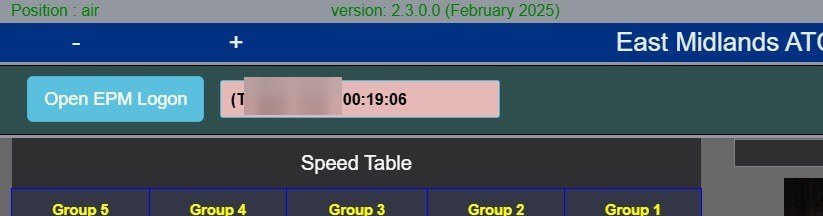
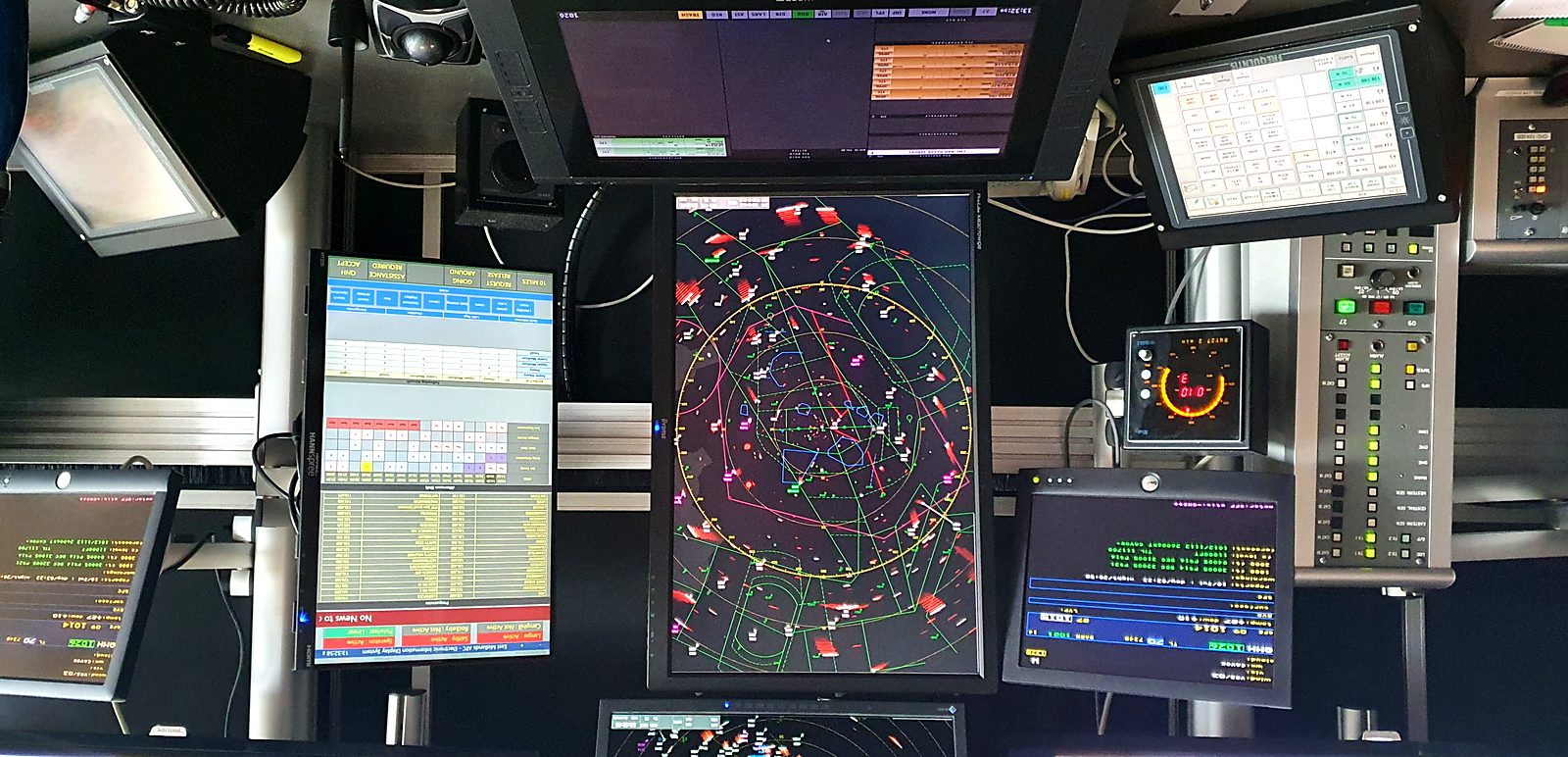
Each CWP is a compact Dell micro PC running Windows with a 23" touchscreen, mounted portrait or landscape to suit the position. Chrome runs in kiosk mode, so there is no desktop, no browser chrome and nothing to wander off into.
- 23" touchscreen, portrait for radar or landscape for tower
- Dell micro-form-factor PC — minimal desk intrusion
- Google Chrome in kiosk mode
- RFID reader at every position
- Each controller carries a uniquely coded personal card
- Positions linked over SignalR — airspace activity, overhead map selections and alarms sync to every screen instantly
Where the platform stands today
MEIDS has been in daily operational use since 2017. Version 3 is the work of taking a unit-grown system and making it something we can deploy and support commercially.
Migrated to modern .NET — done
v3 runs on .NET 10 across the whole solution: the web app, the shared data library, the message handler and the health monitor. Long-term supported, and current on security patching.
Open-source licensing audit — done
Around 60 third-party components reviewed. Copyleft and paid dependencies were removed or replaced, not licensed around. What remains is MIT, Apache 2.0, BSD-style and the PostgreSQL License — all clear for commercial, closed-source deployment.
Security review — in progress
A full review of the system's exposure to external and internal interference, ahead of deployment outside the originating unit.
Interface refinement — in progress
Ongoing work on the front end for a more fluid experience and easier migration onto other devices and screen sizes.
Want the detail?
We're happy to go through architecture, hosting options, integration and support with your technical team.